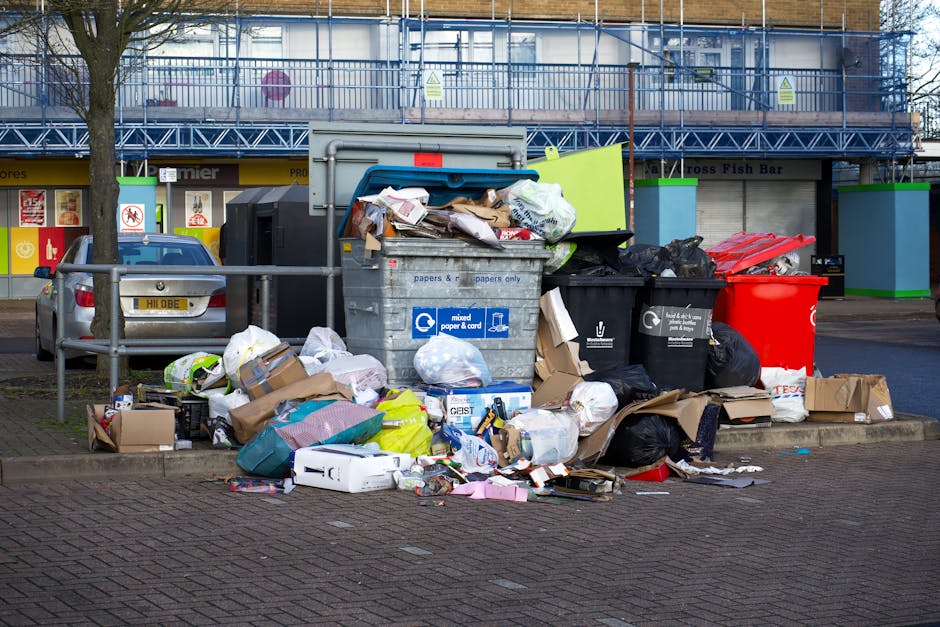
Emergency rubbish collection Aldgate Minories fast response: a practical local guide
If rubbish has piled up suddenly, blocked a walkway, turned an office corner into a fire-risk, or left a flat smelling a bit unpleasant by midday, you do not need a long-winded answer. You need a fast, sensible plan. That is exactly where Emergency rubbish collection Aldgate Minories fast response comes in: a quick, local, no-drama way to get waste removed before it becomes a bigger problem.
In Aldgate and Minories, space is tight, access can be awkward, and delays have a habit of making everything worse. A few sacks outside a doorway can turn into a nuisance. A broken fridge in a shared building can become a safety issue. A builder's skip may not be the best option when time is short. This guide explains how urgent rubbish collection works, what to expect, when it makes sense, and how to avoid the usual headaches. Straightforward stuff, really, but useful.
Table of Contents
- Why emergency rubbish collection matters in Aldgate Minories
- How fast-response rubbish collection works
- Key benefits and practical advantages
- Who needs this service and when it makes sense
- Step-by-step guidance
- Expert tips for better results
- Common mistakes to avoid
- Tools, resources and recommendations
- Law, compliance, standards and best practice
- Options and comparison table
- Case study or real-world example
- Practical checklist
- Conclusion
- Frequently asked questions
Why Emergency rubbish collection Aldgate Minories fast response Matters
Emergency waste problems are rarely about one bag of rubbish. Usually, they are about timing, access, inconvenience, and risk all landing at once. In busy parts of central London, even a modest pile of waste can cause outsized disruption. A corridor narrows. A loading bay gets blocked. Residents start complaining. Staff tiptoe around boxes. The whole place feels messy and tense.
That is why a fast-response collection service matters. It is not just about making things look tidier. It helps restore safe access, reduce trip hazards, cut down on smells and pests, and stop rubbish from hanging around long enough to create a second problem. In some situations, it also helps a business stay open and a household stay usable while a bigger clear-out is arranged.
Aldgate and Minories bring a few quirks of their own. There are mixed-use buildings, office floors, apartments above shops, and narrow streets where timing matters. If waste is left at the wrong time, it can annoy neighbours or cause an avoidable access issue. Let's face it, nobody wants to be that person leaving broken furniture in the wrong place at the wrong hour.
A good emergency rubbish collection should be quick, but not sloppy. Speed matters. So does judgement. The best services work with the realities of the site, rather than pretending every job is a neat, empty driveway in the suburbs.
How Emergency rubbish collection Aldgate Minories fast response Works
Fast-response rubbish removal is usually simpler than people expect. You make contact, explain the waste, describe access, and get a realistic collection window. If the job is urgent, the provider will usually prioritise it based on location, volume, waste type, and how easy it is to load safely.
For many jobs, the process is built around a few practical questions:
- What type of waste needs removing?
- How much waste is there roughly?
- Is it outside, inside, upstairs, or down a tight staircase?
- Is there parking or loading access nearby?
- Does anything need special handling, such as appliances or potentially hazardous items?
Once that is clear, the collection can often be arranged quickly. In urgent situations, crews tend to work in short, focused visits. They arrive, assess, load, sweep up the area, and get on their way. No faff. Sometimes it is almost comically fast: a pile that felt like a catastrophe at 8 a.m. is gone before lunch and you are left wondering why it took so long to make the call.
If the rubbish is mixed, the crew may separate recyclables and general waste where appropriate. If the load includes bulky furniture, white goods, or builders' debris, the team may bring the right lifting gear and vehicle size for the job. That part matters. A rushed collection that is underplanned can become a longer mess than the original pile, which defeats the point completely.
For non-urgent but still important waste jobs, you can also review general services like waste removal and broader clearance options if you want a fuller one-off solution rather than a same-day-style rescue.
Key Benefits and Practical Advantages
There are plenty of reasons people choose an emergency rubbish collection rather than waiting for a regular slot or hiring a skip. The biggest advantage is obvious: time. But the practical value goes wider than that.
1. You get the area back quickly
That matters whether it is a hallway, a shop rear entrance, a flat's front step, or an office store room that has become impossible to use. Clearing waste fast can immediately make a space feel manageable again.
2. You reduce safety and hygiene risks
Loose rubbish can attract pests, create slip hazards, or block access routes. Damp cardboard, food waste, and old soft furnishings can also make smells worse very quickly. In buildings with shared access, one person's delay becomes everyone else's problem. Bit awkward, really.
3. You avoid unnecessary disruption
In busy central locations, a delayed clearance can affect deliveries, staff movement, resident access, and customer experience. Rapid removal keeps the building functioning while you deal with whatever caused the pile-up in the first place.
4. You can handle awkward items without improvising
Bulky furniture, appliances, damaged mattresses, and building offcuts are hard to move safely without the right approach. A prompt collection service helps you avoid dragging heavy items through shared areas or trying to squeeze them into a car that was never meant for the job.
5. You get better control over the next step
When waste is gone, decisions become easier. You can clean, repair, re-open, re-let, continue a project, or simply breathe again. That sounds small, but it is not. A cleared space changes the mood of the place.
For certain loads, specialised pages such as builders' waste clearance, office clearance, or home clearance may be more suitable than a general emergency collection, especially if the waste type is obvious and the job has grown larger than expected.
Who This Is For and When It Makes Sense
Emergency rubbish collection is useful for more people than you might think. It is not just for dramatic clear-outs or major incidents. Often, it is for ordinary situations that have become time-sensitive.
Common users include:
- landlords dealing with end-of-tenancy leftovers
- business owners who need premises cleared before opening hours
- office managers with overflow waste after a move or refurbishment
- homeowners facing an unexpected accumulation of junk
- flat residents with bulky waste that cannot wait
- builders and tradespeople needing site waste gone before the next stage
- property managers handling common-area obstructions
Sometimes the trigger is very ordinary. A tenant leaves furniture behind. A fridge stops working. A renovation finishes and the last pile of rubble sits in the way of the decorating team. Other times it is a bit more urgent: a blocked exit, a bad smell, or waste that simply should not be there any longer.
It makes sense to use an emergency collection when delay would create a bigger cost, a safety concern, or a major inconvenience. If you can wait a few days without consequences, a planned booking may be enough. If not, speed becomes the priority. Simple as that.
Some readers also realise, halfway through the mess, that the issue is really a clearance job rather than just rubbish removal. In those cases, options like flat clearance, house clearance, or furniture clearance can be the better fit.
Step-by-Step Guidance
If you want the fastest, smoothest outcome, a little preparation goes a long way. You do not need to overthink it. Just give the collection team the right information and make the site easy to work with.
Step 1: Identify what needs removing
List the waste in plain English. "Three black bags, one broken desk, one fridge, and some cardboard" is better than "a bit of everything." If there are hazardous or restricted items, mention them clearly. That changes the handling requirements.
Step 2: Estimate the amount
You do not need exact measurements. A rough sense of volume is enough. Is it a small pile, a van-load, or more? If you can, compare it to familiar objects: "about two washing machines' worth" is often more helpful than trying to guess cubic metres. Not scientific, but useful.
Step 3: Describe access honestly
Stairs, narrow corridors, parking restrictions, basement access, or shared entrances all matter. Honest access details help prevent delays. If a van cannot stop directly outside, say so. Better to be upfront than to make the team guess and lose time on the day.
Step 4: Separate anything sensitive or valuable
If there are documents, electronics, personal items, or anything you want to keep, move them out of the way before the team arrives. That sounds obvious, but in a real rush, obvious things get missed. It happens.
Step 5: Confirm timing and payment expectations
For emergency work, clarity is everything. Confirm the expected arrival window, what is included, and how any extra items would be handled if the load turns out to be bigger than expected. You will usually avoid a lot of back-and-forth this way.
Step 6: Clear a route
Open doors, unlock access points, and make sure the team can move safely from the waste to the vehicle. Even ten minutes spent doing this can save much longer on site. A clean path also reduces the chance of knocks, spills, or avoidable damage.
Step 7: Ask for a tidy finish
A reliable crew should not just take the waste and vanish. They should leave the area swept or at least reasonably tidy. In a tight London setting, that final detail matters more than people expect.
If you are booking in advance for a same-day or next-day solution, the site's online booking option can be a sensible place to start, especially when you already know what needs to go.
Expert Tips for Better Results
A few small decisions can make emergency rubbish removal faster and cheaper, or at least less stressful. Here is what tends to help in the real world.
Be specific about the waste type
General descriptions are okay, but specifics help the crew plan loading time and vehicle space. Bulky soft furniture, appliance waste, mixed building rubble, and light household clutter all behave differently on the job.
Keep hazardous items separate
If anything might be classed as hazardous, do not mix it into a general pile and hope for the best. Mention it early. That includes items that may need specialist handling, such as certain chemicals, paints, or contaminated waste. For those situations, a dedicated hazardous waste disposal service is the safer route.
Use the moment to remove the "almost rubbish" too
You know the stuff: the broken chair you have been ignoring for six months, the appliance in the corner, the mattress that has become a permanent guest. If the team is already there, it can be worth clearing those items while the access is open.
Think about the building as a whole
In shared buildings, a quick collection often works best when residents, staff, or neighbours know what is happening. A short heads-up can reduce friction. Nothing dramatic. Just enough to avoid surprise.
Plan for recycling where possible
Emergency does not have to mean careless. Reusable materials and recyclable items should still be treated sensibly. If sustainability matters to you, take a look at the company's recycling and sustainability approach before you book.
Ask what the service includes
Some collections include loading only, while others include lifting from inside the property, light dismantling, or sweeping the area afterward. It sounds minor, but this is where misunderstandings often start. Ask early and keep it simple.
Expert summary: The fastest emergency collection is usually the one that is planned just enough to avoid confusion, but not so much that it slows everything down. Give clear details, keep access open, and choose the right type of clearance for the waste you actually have.
Common Mistakes to Avoid
When people are in a hurry, the same mistakes come up again and again. They are easy to make. Also easy to avoid, thankfully.
- Underestimating the volume: A pile that looks small from one angle can balloon once moved.
- Hiding awkward items: If the crew discovers a fridge or a heavy item late, the schedule may slip.
- Ignoring access problems: Low walls, narrow stairs, or no parking can add real time.
- Mixing restricted waste with normal waste: That can create handling issues and possible refusal of part of the load.
- Choosing the wrong service type: A simple rubbish collection is not always the best fit for a full flat, office, or furniture clear-out.
- Leaving everything until the last second: In urgent jobs, that is how stress multiplies.
One thing people often forget is that "urgent" does not mean "impossible to plan." Even a ten-minute walkthrough of the site can save a lot of trouble. Honestly, it is usually enough.
If the mess has grown into a bigger property job, a more tailored service such as mattress and sofa disposal or fridge and appliance removal may fit better than a generic clearance.
Tools, Resources and Recommendations
You do not need much to prepare for a fast collection, but a few simple tools make things easier. A tape measure is useful if you are estimating bulky items. A phone photo or two helps describe the waste more accurately. Gloves and sturdy footwear are sensible if you are moving anything yourself before the team arrives.
For business users, it can help to keep a short internal note with the items most likely to need urgent removal, the access details, and who authorises the booking. That way, when a problem comes up, you are not starting from scratch with a half-remembered corridor description and a vague sense of panic.
Useful company pages to review before booking include pricing and quotes for cost clarity, insurance and safety for peace of mind, and about the company if you want to understand who is handling the job.
For those sorting business waste specifically, the service can be more efficient when paired with business waste removal, especially if the same site also has office rubbish or packaging to deal with.
Law, Compliance, Standards and Best Practice
Waste removal in the UK is not something to treat casually. Even in an emergency, waste should be handled responsibly and disposed of through proper channels. That includes keeping unsafe items separate, avoiding fly-tipping, and making sure the service is operating with appropriate care and documentation.
For businesses, compliance matters even more because waste handling is part of broader operational responsibility. Good practice usually means choosing a provider that takes safety seriously, understands sorting and loading risks, and can explain how materials are handled. If a job involves sensitive items, confidential papers, or workplace records, a dedicated service such as confidential shredding may be needed alongside waste removal.
There are also practical standards worth expecting even when the work is urgent:
- clear communication before arrival
- safe lifting and loading methods
- appropriate segregation of restricted items
- respect for shared spaces and access routes
- careful behaviour around residents, staff, and the public
In central London, that last point matters a lot. A quick job that leaves a stairwell scratched, a corridor blocked, or a mess behind is not really a good job. The standard should be fast and tidy.
If you want to understand how the company frames safety and responsibility, the pages on health and safety policy and terms and conditions are sensible reads before you confirm a booking.
Options, Methods, or Comparison Table
Different situations call for different solutions. Emergency rubbish collection is often the best answer for speed, but not always the only answer. Here is a simple comparison to help you choose.
| Option | Best for | Strengths | Limitations |
|---|---|---|---|
| Emergency rubbish collection | Urgent waste, tight access, fast turnaround | Quick, flexible, minimal disruption | May be less suitable for very large volumes |
| Planned waste removal | Jobs that can wait a little | Often easier to schedule around other work | Not ideal if waste is causing immediate problems |
| Bulky item clearance | Furniture, appliances, single large items | Efficient for awkward loads | May need item-specific handling |
| Full property clearance | Flats, houses, offices, or storage spaces | Covers more ground in one visit | Usually takes more time and planning |
| Builders' waste clearance | Construction debris, renovation leftovers | Good for trade waste and rubble | Not the right choice for mixed domestic clutter |
If you are unsure, start with the question: what problem needs solving first? If it is access, safety, or an immediate nuisance, the emergency route is often the right one. If it is a full-scale clear-out, a more specific service may save time in the long run.
Case Study or Real-World Example
Picture a small office near Minories on a Monday morning. Over the weekend, a storage room has been cleared, but the result is awkward: broken shelving, bags of packaging, an old printer, and a couple of bulky chairs now sitting in the corridor. Staff are arriving, deliveries are due, and the room is right by the fire exit. Not ideal.
The first instinct is often to move things "just for now." But then the corridor stays blocked, the space feels cramped, and someone spends twenty minutes trying to shuffle items into a corner that was never meant to hold them. By mid-morning, the situation is not improving on its own. It usually doesn't.
In a case like this, a fast-response collection solves the immediate issue. The waste is described clearly, access is confirmed, and the crew arrives prepared to load mixed office items safely. The corridor is restored, the office can function normally, and the team stops losing time around a pile of junk that had become the loudest thing in the room, if that makes sense.
The point is not that every emergency job is dramatic. Most are quietly annoying. But in a dense area like Aldgate Minories, quiet annoyance can still have real cost.
Practical Checklist
Use this before booking, and again before the crew arrives.
- Identify the waste clearly
- Estimate how much there is
- Check for bulky, heavy, or awkward items
- Separate any hazardous or restricted waste
- Confirm access, stairs, and parking details
- Remove personal, confidential, or valuable items
- Make a clear route to the waste
- Confirm timing and what is included
- Ask about recycling where relevant
- Make sure someone is available to grant access if needed
A quick check like this sounds small, but it prevents the most common delays. And in an emergency, delays are exactly what you do not want.
Conclusion
Emergency rubbish collection Aldgate Minories fast response is about more than speed. It is about getting control back quickly, safely, and with as little disruption as possible. When waste is blocking access, creating risk, or simply making life more difficult than it needs to be, the right response is a clean, practical one: describe the problem well, choose the right service, and let an experienced team handle the lifting.
In a busy part of London, that kind of help can make the difference between a stressful day and a manageable one. Whether you are dealing with office clutter, bulky household waste, builder leftovers, or an awkward one-off pile, the best results come from clear information and a prompt call.
If you are ready to sort it properly, the next step is simple. Get in touch and explain what needs removing, where it is, and how quickly it needs to go. That first conversation usually clears the fog fast.
Get a free quote today and see how much you can save.
Frequently Asked Questions
How fast can emergency rubbish collection usually happen in Aldgate Minories?
It depends on the type of waste, access, and how busy the schedule is, but urgent jobs are usually handled as quickly as possible once the details are confirmed. Clear information helps speed everything up.
What kinds of rubbish can be collected urgently?
Common items include general household waste, bulky furniture, office clutter, packaging, builders' debris, and some appliances. If anything unusual or hazardous is involved, mention it before booking.
Is emergency rubbish collection the same as full property clearance?
Not always. Emergency collection is focused on speed and removing a specific problem quickly. Full property clearance is broader and may cover an entire flat, house, office, or storage space.
Can you book an urgent collection for a flat with difficult access?
Yes, but access details matter a lot. Stairs, narrow corridors, and parking restrictions can affect timing, so it is best to describe them honestly from the start.
Do I need to sort the waste before the team arrives?
Basic sorting helps, but it is not always essential. What matters most is being clear about what is there, especially if bulky, restricted, or hazardous items are included.
What should I do with a broken fridge or appliance?
Appliances usually need careful handling, so it is best to mention them specifically. A dedicated fridge and appliance removal service may be the right fit.
How do I know if I need hazardous waste disposal instead?
If the items include chemicals, contaminated materials, or anything that could be unsafe to handle with general rubbish, speak up before booking. It is better to over-clarify than to guess.
Will the collection team load waste from inside the property?
Often yes, but this depends on the service scope and site access. Ask this directly so there is no misunderstanding on the day.
Is fast-response waste collection suitable for businesses?
Absolutely. Offices, shops, and managed buildings often need urgent waste removal to keep operations moving. Business jobs tend to benefit from clear access details and a named contact on site.
How can I keep costs under control for an emergency job?
Give accurate waste descriptions, mention access issues, and group items together if possible. Choosing the right service type also helps avoid paying for something larger than you need.
What if I only need one or two bulky items removed quickly?
That is a very common request. A small collection can still be treated as an emergency if the items are blocking space, causing a safety issue, or simply cannot wait.
Where can I read more about the company before booking?
You can look at about us, pricing and quotes, and insurance and safety to get a better feel for how the service is run.
Sometimes the best relief is the quiet moment after the last bag goes. The space feels bigger, the air feels lighter, and you can finally move on.